Recent Posts

The Blessedness of Forgiveness

In Psalm 32:1–2, David sang, “Blessed is he whose transgression is forgiven, whose sin is covered. Blessed is the man unto whom the LORD imputeth not iniquity, and in whose spirit there is no guile”.

Whether it be health, security, prosperity, companionship, or freedom from trouble, none compares with the blessing that David celebrates at the beginning of Psalm 32: the forgiveness of sin. A person may possess much in this world and yet remain miserable under the guilt and condemnation of sin. Conversely, one may suffer affliction, deprivation and sorrow, but be truly blessed because he knows that his sins are forgiven and he has peace with God.

Forgiveness is a matchless blessing because only God can forgive sin. Daniel confessed, “To the Lord our God belong mercies and forgivenesses” (Daniel 9:9). Forgiveness belongs to God because every sin is ultimately committed against Him. Sin is far more than a small mistake or a human weakness. It is rebellion against the holy God, such as violating His righteous commandments and doing wrong against others. This is clear in David’s confession of sins to the Lord, “Against thee, thee only, have I sinned, and done this evil in thy sight” (Psalm 51:4). In the story of the prodigal son who returned to his father, he said, “Father, I have sinned against heaven, and in thy sight” (Luke 15:21), acknowledging that his rebellion was ultimately against God.

We cannot grasp the blessedness of forgiveness unless we first recognise the seriousness of sin. God is perfectly holy and He cannot be indifferent to iniquity. His righteous anger visits unrepentant sinners: “God is angry with the wicked every day” (Psalm 7:11). Every sinner is therefore exposed to divine judgment. No human effort can erase one’s own guilty conscience, appease God’s wrath, or restore fellowship with God. If the Lord were to deal with us according to our sins, none could stand before Him.

How wonderful, then, are David’s words: “Blessed is he whose transgression is forgiven”. The word translated “forgiven” conveys the idea of something being lifted up and carried away. Sin places a crushing burden on the conscience that the sinner cannot remove. But when God forgives, He lifts that burden and takes it away. David had experienced the misery of concealing his sin. He testified that when he kept silence, his bones waxed old, and the Lord’s hand was heavy upon him day and night (Psalm 32:3-4). But when he acknowledged his sin and ceased hiding his iniquity, he received the Lord’s gracious pardon.

David also declares that the forgiven man’s sin is “covered”. Certainly, this does not mean that God pretends sin never occurred. Sin can be covered only because its guilt has been fully dealt with. In the Old Testament sacrifices, God pointed His people towards the perfect atonement that would be accomplished by Jesus Christ. On the cross, Christ bore the punishment for His people’s sins. He, the sinless One, suffered in the place of sinners, thereby satisfying the righteous demands of God’s law. Therefore, God is both perfectly just in punishing sinners, and merciful in forgiving repentant sinners.

Next, we read the astonishing words: “Blessed is the man unto whom the LORD imputeth not iniquity”. The divine record against the believer has been cancelled! Scripture declares that Christ has forgiven us of all our trespasses, “blotting out the handwriting of ordinances that was against us”, and has taken it out of the way, “nailing it to his cross” (Colossians 2:13–14). The charges that condemned us have been settled by the blood of Christ which is the ransom/payment of our sins. The sins that testified against us cannot rise again to condemn us before God.

The apostle Paul quotes Psalm 32:1–2 in Romans 4:6–8 to describe the blessedness of justification which is received by faith. Those who believe in Jesus Christ are justified. Christ’s righteousness is reckoned to the believer. This forgiveness is not a reward earned by good works, or religious observances. It is God’s gracious gift, received through faith in Christ.

Perhaps someone may ask, “Can God forgive me after all that I have done? I have resisted His Word, taken His patience for granted, and repeatedly returned to the same sins. Am I not too guilty to be forgiven?” Hear the Lord’s gracious declaration: “I, even I, am he that blotteth out thy transgressions for mine own sake, and will not remember thy sins” (Isaiah 43:25). The ground of forgiveness is not our worthiness but God’s mercy in Christ. No sinner who truly repents and comes to Christ will be cast out.

Psalm 32:2b also says that the blessed man is one “in whose spirit there is no guile”. This does not describe a man who has never sinned, but one who no longer tries to conceal, excuse or minimise his sin. He comes honestly before God. True repentance rejects every deceitful attempt at self-justification. It accepts God’s verdict, confesses sin and seeks mercy. As long as we hide our sin, we remain restless and spiritually burdened. But when we confess it, we discover that “he is faithful and just to forgive us our sins, and to cleanse us from all unrighteousness” (1 John 1:9).

Dear brethren, do not carry a burden which Christ is willing to remove. Do not allow shame to drive you away from the only One who can cleanse you. Let guilt drive you to Christ, not from Him. Come with a contrite heart, confessing your sin without guile and trusting wholly in His finished work: “There is forgiveness with thee, that thou mayest be feared” (Psalm 130:4).

Those who have received such mercy must never respond casually. Forgiveness should produce reverence, gratitude and renewed obedience. The pardoned sinner does not say, “Because grace abounds, I may continue in sin.” Rather, he asks, “How can I live for Him who loved me and gave Himself for me?” Forgiveness brings joy in worship and in service to God.

Let us rejoice, for the wrath we deserved has been turned away. Truly, blessed is the one whose transgression is forgiven, whose sin is covered, and unto whom the Lord imputeth not iniquity.

Read More
Can Popular Teachers and Their Teaching Be Pernicious?

2 Peter 2:1–2 “But there were false prophets also among the people, even as there shall be false teachers among you, who privily shall bring in damnable heresies, even denying the Lord that bought them, and bring upon themselves swift destruction. And many shall follow their pernicious ways; by reason of whom the way of truth shall be evil spoken of.”

Peter writes with pastoral urgency to warn the church that false teaching is dangerous not only because it is wrong, but also because it can become extraordinarily popular. “Many shall follow”, he declares. Error does not always repel people; it frequently attracts them. Therefore, crowds, widespread influence, impressive platforms, and enthusiastic followers are never reliable proofs that a teacher has God’s approval.

The immediate context makes the danger unmistakable. Peter warns that false teachers would “privily bring in damnable heresies” (v. 1). The word “privily” indicates that error is commonly introduced subtly and gradually. False teachers do not always begin by openly denying every Christian doctrine. They never announce, “I am bringing heresy into the church”. They may continue to use biblical expressions, speak affectionately of Jesus, quote Scripture, and identify themselves with the church. However, beneath this Christian appearance, they alter the meaning of biblical truth and introduce teachings that ultimately deny “the Lord that bought them”. They may claim to have a new insight, or a recent experience of God. They reinterpret Scripture to remain culturally relevant while quietly weakening biblical teaching. They remove the necessity of repentance from God’s grace, and diminish the importance of holiness when speaking of God’s love. 

Peter calls such erroneous teachings and conduct “pernicious ways”. “Pernicious” means destructive, ruinous, or morally corrupting. False teaching is never an innocent intellectual mistake when it directly contradicts essential biblical truths and turns people away from obedience to Christ. Some doctrines may appear harmless at first, but their ultimate result is spiritual destruction. These false doctrines damage the mind and corrupt the conscience, thereby imperilling the soul, and weakening the fidelity of the church to God’s truth.  

The present-day church must take this warning seriously because false teaching has an  unprecedented ability to spread rapidly. Through television, livestreams, social media posts, podcasts, videos, online conferences, and short quotations detached from their context, a false teacher can influence millions around the world within hours. A captivating but erroneous teacher may thus enter Christian homes and churches without ever being examined by local pastors or elders. Believers may gradually place greater confidence in an online personality than in the faithful shepherds whom God has appointed to watch for their souls.

One of the deceptions and dangers of digital popularity is that it also creates an illusion of authority. A teacher with millions of followers, professionally produced programmes, bestselling books, celebrity endorsements, and stories of remarkable success may appear highly credible. However, none of these things prove his faithfulness to Scripture, for biblical truth is not ascertained by view counts, book sales, emotional testimonies, or the size of a congregation. 

The prophets of Baal greatly outnumbered Elijah—450 prophets against one prophet of the LORD—but their sheer numbers did not make their religion true (1 Kings 18:19, 22). Many followed Christ when they desired His miracles and bread but withdrew when His teaching offended them (John 6:60–66).

Peter’s words, “many shall follow”, warn us not to assume that serious error will attract only a small and insignificant following. The popularity of a message may sometimes indicate that it appeals to fallen human desires because people welcome preaching that promises divine blessing without submission to divine authority. They readily embrace a gospel that offers health, wealth, success, self-esteem, or emotional comfort while saying little about sin, judgment, repentance, self-denial, and the cross.

Peter explains that false doctrine and immoral conduct frequently accompany one another (2 Peter 2:12–19). A teacher’s false theology cannot remain hidden in the way he lives. Pride, greed, sensuality, dishonesty, and the misuse of spiritual authority reveal the corrupting tendency of his teaching. Peter describes false teachers as those who exploit people “through covetousness” and “with feigned words” (v. 3). Their ministry becomes a means of personal enrichment and self-exaltation.

The church must therefore examine both teaching and conduct. Does the teacher explain Scripture faithfully in its context, or use isolated verses to support his own ideas? Does he exalt Christ or continually draw attention to himself? Does he preach the holiness and sovereignty of God, the guilt of sinful man, Christ’s substitutionary death, justification by faith, repentance, and sanctification? Is he accountable to a sound church? Does his life exhibit humility, purity, honesty, and servant-heartedness? How does he respond when his teaching or behaviour is biblically questioned?

The consequences of false teaching extend beyond those immediately deceived. Peter says, “by reason of whom the way of truth shall be evil spoken of”. When professing Christian leaders manipulate followers, accumulate wealth through false promises, engage in immorality, or make false claims, unbelievers often attribute their wickedness to Christianity itself. The world then mocks the Gospel because those who claimed to represent Christ have disgraced His name.

“The way of truth” is God’s plan of salvation and godliness taught in Scripture. Scripture is the truth of God (John 17:17) and all that it teaches directs us “the way of truth”. The truth is perfect and cannot be corrupted in itself, but its reputation among men can be damaged by those who falsely profess it. Sound teaching adorned by godly living commends the Gospel; distorted teaching joined with moral compromise gives Christ’s enemies occasion to blaspheme.

Pastors and elders must therefore protect the flock. They must preach the whole counsel of God, refute error, train believers in sound doctrine, and warn them of influential teachers who endanger their souls. Parents must know what preaching, music, books, and online materials are shaping their children’s theology. Beware also of secular education that promotes atheism, evolution, gender confusion, and other unbiblical ideas.

Church members must not forward or share every inspiring quotation or dramatic testimony without examining its source and message. Christian love cannot remain indifferent when truth is being corrupted. Love “rejoiceth in the truth” (1 Corinthians 13:6). To warn someone against spiritual poison is not unkindness; it is truthful love.

The church’s first question must never be, “Is this teacher popular?” It must be, “Is this the way of truth?” Faithfulness to Christ may not always attract the many, but it will honour God, preserve His people in the truth, and maintain a clear testimony before the world. Let us therefore hold fast the faithful Word, test every teaching by Scripture, follow only those who follow Christ, and refuse to exchange eternal truth for popular but pernicious error.

Read More
Shine as Lights in the World!

Remembering God’s Calling as We Prepare for the 21st Thanksgiving Anniversary of TGCM

God has graciously called and equipped our church to bring the Gospel, biblical counsel, and Christian fellowship to ex-convicts and those delivered from addictions. For this purpose, The Gethsemane Care Ministry was established twenty-one years ago. Through the years, hundreds have received care, instruction, encouragement, and the ministry of God’s Word.

As an extension of this ministry, we have also been given opportunities to bring the Gospel to prisons through our preachers and brethren, who make weekly visits to minister to inmates. We are now prayerfully considering another avenue of ministry, a special Gospel and fellowship meeting for ex-convicts, perhaps once a month, with the aim of encouraging them to continue steadfastly in the Lord and in the fellowship of His people.

This Tuesday, a Thanksgiving Service for the 21st Anniversary of TGCM will be held in conjunction with our weekly church prayer meeting at 8.00pm. I warmly encourage all our brethren to come and join us in giving thanks to God for His sustaining grace, and in praying for the future of this ministry. May the Lord renew in us a compassionate concern for those struggling with the consequences of sin, and strengthen our confidence in the transforming power of the Gospel.

As we prepare for this thanksgiving, Philippians 2:15 provides a fitting exhortation: “That ye may be blameless and harmless, the sons of God, without rebuke, in the midst of a crooked and perverse nation, among whom ye shine as lights in the world.”

The opening words, “blameless and harmless, the sons of God, without rebuke”, describe what God expects His children to be in a world darkened by sin. There ought to be a discernible difference between the conduct of God’s children and that of those who remain without Christ. Christians are called to shine as lights, and such shining requires a life consistent with the Gospel we proclaim.

First, we are to be “blameless”. The Greek word carries the idea of being above reproach. This does not mean that Christians will never be falsely accused. Our Lord Himself was falsely accused, as were His apostles. Rather, our conduct should give no legitimate occasion for accusations of wrongdoing. We must not be professing Christians while living contrary to the faith.

Paul could testify of himself, “Men and brethren, I have lived in all good conscience before God until this day” (Acts 23:1). Such ought to be our desire to maintain a conscience that is clear before God and men. Especially when we seek to help those whose lives have been scarred by sin, our own testimony must commend the holiness and grace of the Saviour whom we proclaim.

Secondly, believers are exhorted to be “harmless”. The same Greek word appears in Matthew 10:16, where Christ commanded His disciples to be “wise as serpents, and harmless as doves”. The word conveys the idea of purity, sincerity, and freedom from corrupt mixture. There should be no deceitful or harmful spirit in the children of God. Our testimony must be sincere and untainted.

Those who have been justified by faith will desire a sanctified life. Salvation is entirely by grace through faith, but the grace that saves also begins the work of holiness in the believer. God’s children do not become sinless in this life, yet the Holy Spirit produces in them an increasing hatred of sin and desire for righteousness. They seek to put away “the sin which doth so easily beset us” (Hebrews 12:1) and to walk in a manner pleasing to their heavenly Father.

We are also commanded to be “without rebuke”. Christians ought to take great care that their words, conduct, relationships, dealings, and attitudes do not bring legitimate reproach upon the name of Christ. We live in a world filled with temptations, provocations, and opportunities for compromise. Therefore, watchfulness and prayer are indispensable to every Christian. A careless Christian can easily damage, in a few moments, a testimony that took years to establish.

Paul then reminds us where this holy testimony must be maintained: “in the midst of a crooked and perverse nation”. Those words are striking. They echo Moses’ description of a rebellious generation in Deuteronomy 32:5: “They have corrupted themselves… they are a perverse and crooked generation”. Scripture does not flatter the moral condition of a fallen society. Human philosophies may speak confidently of moral progress, but God’s Word describes a world whose thinking, desires, values, and ambitions have been utterly distorted by sin.

Christians therefore must not blend in with the world so completely that no one can recognise them as Christians. If our ambitions, entertainment, speech, morality, values, and conduct are indistinguishable from those of the unbelieving world, how shall we fulfil the command to “shine as lights”?

God calls us to something altogether different. The word “light” in Scripture is rich with spiritual significance. It is associated with divine truth, holiness, wisdom, salvation, joy, and the glory of God. To shine as lights is therefore to manifest something of God’s truth and holiness in a darkened world. Through our words and deeds, we are to point others away from sin and towards Christ.

Our Lord Jesus declared: “Ye are the light of the world. A city that is set on an hill cannot be hid… Let your light so shine before men, that they may see your good works, and glorify your Father which is in heaven” (Matthew 5:14–16).

Notice that Christ does not command us to manufacture light of our own. We shine because we have received His light. The Gospel has opened our eyes, brought us out of darkness, and called us into fellowship with Christ. Therefore, the light we bear must direct attention not to ourselves, but to our heavenly Father and to the saving grace of Christ.

Neither does shining as lights require us to withdraw from society. Christianity does not call us to live as hermits, avoiding all contact with sinners. Light is most needed where darkness is greatest. Our calling is not isolation, but a holy engagement with sinners. We enter the world without becoming like the world. We speak to sinners without embracing their sins. We show compassion without compromising truth. We extend friendship without abandoning holiness.

This principle lies at the heart of ministries such as TGCM. Men and women who have suffered the consequences of crime, addiction, broken relationships, and destructive habits do not need merely social assistance. They need the light of the Gospel. They need to hear that Jesus Christ saves sinners, breaks the dominion of sin, forgives the repentant, and gives newness of life. They also need to see that Gospel displayed through patient Christian love, faithful counsel, examples of holy living, and steadfast fellowship with like-minded brethren in the church.

The designated place for light is darkness. May God therefore keep us from shrinking back from difficult ministries or difficult people. May He give us a courage and compassion without pride and self-righteousness. May we shine before those who are struggling in the darkness of sin, directing them to the Saviour who declared, “I am the light of the world” (John 8:12).

As we commemorate twenty-one years of TGCM, let us thank God for every life touched by His Word through this ministry and every opportunity He has given us to minister to those in need. There are still many who need the Gospel, many who need encouragement after release from prison, many who need Christian fellowship to help them resist old temptations, and many who need brethren willing to walk patiently with them. Therefore, let us also look forward to more opportunities of ministry. 

May the Lord make us faithful luminaries in this dark world, shining through our words, our conduct, our compassion, and our steadfast proclamation of Christ. And may many who presently grope in darkness be led, through the light of the Gospel, into the salvation, wisdom, joy, and peace that are found in our Lord Jesus Christ.

Read More
Will We Courageously Proclaim the Gospel Despite Opposition?

“But even after that we had suffered before, and were shamefully entreated, as ye know, at Philippi, we were bold in our God to speak unto you the gospel of God with much contention” (1 Thessalonians 2:2).

The apostle Paul reminds the Thessalonian believers that the Gospel first reached them through faithful servants who refused to be silenced by suffering. Before arriving in Thessalonica, Paul and Silas had been publicly beaten, unjustly imprisoned, and shamefully humiliated at Philippi (Acts 16:22–24). Humanly speaking, such cruel treatment would have been reason enough to abandon their mission. Instead, having been strengthened by the Lord, they pressed on to proclaim Christ with even greater resolve.

Paul writes, “we were bold in our God”. Their courage did not arise from natural bravery or self-confidence, but from an unwavering trust in the Lord. They knew that the God who had called them was also able to sustain them. Christian boldness is not the absence of fear but the presence of a steadfast faith that obeys Christ despite fear, hardship, or hostility.

Paul also says that they preached “the gospel of God with much contention”. Gospel ministry has always been accompanied by spiritual conflict. Satan fiercely opposes the advancement of God’s truth. Those who faithfully witness for Christ should not expect universal acceptance. Ridicule, misunderstanding, rejection, and even persecution have often been the lot of God’s people throughout history. Yet none of these can hinder the saving power of the Gospel or frustrate the sovereign purposes of God.

As our church continues to fulfil the Great Commission, every member must remember that witnessing for Christ is not the responsibility of a few but the privilege and calling of all believers. Whether in our homes, workplaces, schools, neighbourhoods, or mission fields, we are Christ’s ambassadors. The world today desperately needs the unchanging Gospel, but many remain silent because of fear of rejection. Let us not allow such fears to rob us of opportunities to point sinners to the Saviour.

Beloved, let us pray earnestly for the same holy boldness that strengthened Paul and Silas. May we never be ashamed of the Gospel of Christ. Let us lovingly, wisely, and faithfully bear witness to Him whenever He opens the door. Though opposition may come, our confidence rests not in ourselves but in our sovereign Lord, whose Word shall never return void. May He grant us courage to stand for His truth, and compassion to proclaim His saving grace until Christ comes again.


GBI, Vizag: Ministry Update and Prayer Requests

(The following report is sent by Pastor Sujith Samuel.)

Greetings in the name of our Lord and Saviour Jesus Christ!

We had the opening of our new semester this past Monday (27 July). This semester, the Lord has blessed us with six new students, five of whom are local pastors. They will be attending classes at our city campus. One is a residential student from Odisha and, God willing, he will arrive in Vizag this weekend.

Thank you for taking the time to teach Biblical Covenants and The Names of God on Mondays and Wednesdays through GBI, Singapore. Most of our students have enrolled in these subjects. In addition, several students have registered for FEBC’s online courses. This semester, I will be teaching Calvin’s Institutes and the Westminster Confession of Faith, while Pr Jonathan will be teaching Ancient Heresies and The Life of Christ. Please pray that the Lord will grant us wisdom, strength, and grace to prepare diligently and to teach His Word faithfully.

The renovation work at our city office is almost complete. We thank the Lord for providing additional space for Sunday worship services and GBI classes at our city campus. Our office rooms and bookroom have now been relocated to the middle floor of the building, making the facilities better suited for our ministry.

We are still waiting for permission from the city authorities for our permanent campus in the new airport area. Please pray that the Lord will help us to obtain the permits as soon as possible.

Thank you very much for your faithful prayers and the generous support of GBPC, Singapore, for the Lord’s work here. We are deeply grateful for your partnership in the Gospel.

Read More
The Gospel Ministry Towards Children

The Gospel ministry towards children is not a lesser ministry in the church; it is a vital and sacred stewardship entrusted to God’s people. Scripture consistently reveals God’s concern for children and His command to His people to diligently teach them His truth. Moses instructed Israel, “And these words, which I command thee this day, shall be in thine heart: and thou shalt teach them diligently unto thy children” (Deuteronomy 6:6–7). The Gospel ministry to children, therefore, is not merely educational; it is spiritual labour with eternal significance.

Our Lord Jesus Christ demonstrated special care for children. When the disciples attempted to keep children away, Jesus rebuked them, saying, “Suffer the little children to come unto me, and forbid them not: for of such is the kingdom of God” (Mark 10:14). Christ welcomed children, blessed them, and used them as examples of humble faith. Such passages remind us that children are part of the church’s present concern and responsibility.

Our children live in a world that is increasingly hostile to biblical truth. They are exposed early to worldly philosophies, moral confusion, entertainment-driven values, and countless distractions that shape their hearts and minds. In schools, even kindergartens, children are constantly exposed to undesirable behaviours through peer influence and the many things they hear, watch, and encounter around them.

Therefore, the Gospel ministry towards children must be intentional, faithful and persistent. Churches and Christian homes must work together to ground children in Scripture, prayer, worship, and godly discipline. If parents thoughtlessly expose their children to worldly influences, great spiritual dangers and devastating consequences may await them. Parents must not only teach and inculcate godly discipline, but also ensure that their children attend church-organised programmes for the benefit of their spiritual growth.

The aim of the children’s ministry is not simply to entertain, occupy, or produce moral behaviour. Our goal is that children may understand their sinfulness, hear the message of Christ crucified and risen, and be led to trust Him as Saviour and Lord. Paul reminded Timothy that “from a child thou hast known the holy scriptures, which are able to make thee wise unto salvation through faith which is in Christ Jesus” (2 Timothy 3:15). Salvation belongs to the Lord, and spiritual growth is His work. Parents, teachers, pastors, preachers and church members must sow the seed faithfully, trusting God to give the increase.

We thank God that our overseas mission stations likewise place great emphasis on the Gospel ministry among children. In today’s bulletin, we publish a photo report of the children’s outreach ministry in India. God willing, more reports from Ethiopia will follow next week.

Group photo

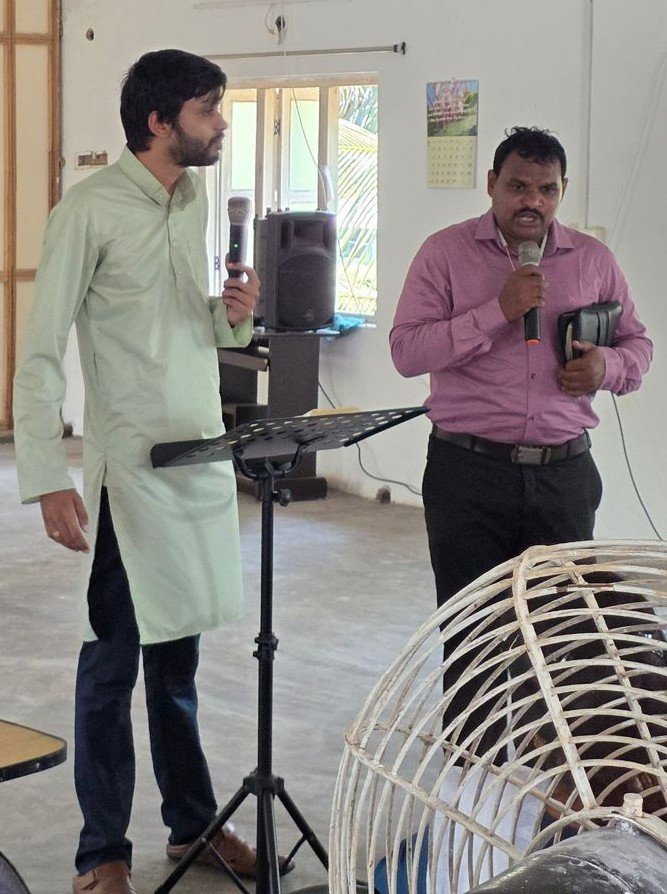
Pastor Sujith and Pr Buji addressing the children

Mealtime

Bro. Joshua Nah teaching songs

Nursery Class

Read More
Rescue the Perishing!

A testimony by Ricky and Stella Yang of God’s saving grace working through their witnessing! 

“Rescue the perishing, Care for the dying,
Snatch them in pity from sin and the grave;
Weep o’er the erring one, Lift up the fallen,
Tell them of Jesus the mighty to save.
Rescue the perishing, Care for the dying;
Jesus is merciful, Jesus will save.”

These words from the hymn echoed in my head as we witnessed, with solemnity and rejoicing, the ordination of one of the preachers at the conclusion of our church’s 7th Missionary Conference on 14 June 2024. The passion for souls and the testimonies from the missionaries to preach Christ even amid oppression and in custody, did not deter or distract them from the call to preach and win some to Christ; they spoke of how these things reminded us of the greater urgency and burden to rescue the perishing and care for the dying, and be truly Proclaimers of Faith “Under Fire” – which was the theme of the Missionary Conference. 

On 17 June 2024, shortly after our return from the Missionary Conference, we received a call that one of our relatives, Mr Louis Lee, was taken to hospital and was in critical condition. With the Missionary Conference messages still freshly imprinted and warmly glowing in our hearts, we visited Mr Lee at the hospital’s Intensive Care Unit. Though Mr Lee was intubated and in discomfort, he was lucid and was able to respond in short breaths and nods. We praise and thank God for the timely treatment he received and, more so, for the timely reminder of the urgency to rescue the perishing and care for the dying. We shared the Gospel message with him and pointed him to Jesus, who is mighty to save. By God’s amazing mercy and grace, Mr Lee readily said, “Amen”, and acknowledged his faith and trust in the Lord Jesus Christ for salvation and expressed his readiness for baptism in the presence of his wife, Ailene. We immediately informed Pastor Koshy and he, together with Sis Carolyn and Eld Mah, visited Mr Lee and reaffirmed his faith that evening. It was such a relief to see Mr Lee’s condition stabilised and such a joy to see how his heart has been prepared by the working of the Holy Spirit, especially through times like this, to turn to Jesus Christ. All praise and thanks to God for saving Mr Lee, and for his confession of his faith in Jesus Christ through his baptism at the hospital. 

In our subsequent visits to Mr Lee, initially at the hospital and later at the nursing home, we prayed with him and regularly reminded him of the day he trusted Jesus Christ for salvation. We also learned during these visits of Mr Lee’s deep concern for his daughter, Marilene, who had Stage 4 cancer in her intestines and had been receiving treatments. Mr Lee repeatedly requested that we reach out to Marilene, and we said we would try. We also encouraged him to pray for the salvation of both his wife Ailene and his daughter Marilene.

We attempted to reach Marilene, and the opportunity came when we were informed that she was hospitalised recently in early February 2025. The Lord again reminded us of the call to rescue the perishing. We were so happy to receive a warm and hearty welcome from Marilene when we visited her at the hospital on 22 February. Though in pain and discomfort, Marilene was open to sharing with us the issues and concerns in her heart as she pondered over the uncertainty concerning which treatment option she should take for her cancer. We offered to pray for God’s direction and peace as she considered the options. At the same time, we asked if she would be open to us sharing the Gospel of peace and salvation. Again, through God’s amazing mercy and grace, she readily responded and said she had been considering doing Bible study with her neighbour. Praise the Lord for His perfect working and timing – her heart and soul have been prepared. Clearly and affirmatively, Marilene prayed with us, and confessed her faith in the Lord Jesus Christ! 

“That if thou shalt confess with thy mouth the Lord Jesus, and shalt believe in thine heart that God hath raised him from the dead, thou shalt be saved” (Rom 10:9). What a joy and assurance it was when she also readily expressed her desire for baptism, and encouraged her mother, Ailene, to come to Christ, too!

Marilene’s condition took a sudden turn on 24 February when there was a rupture in her intestine, causing excruciating pain and intense discomfort. Her condition suddenly became critical, and necessitated an emergency surgery that evening. All praise and thanks to God for seeing her safely through her surgery, which thus resolved the burden of the treatment options that were weighing on her heart.

This also impressed upon us the urgency of arranging for her baptism. We arranged for Pastor Koshy and Elder Mah to visit Marilene at the Intensive Care Unit on 25 February, the day after her surgery. Though drowsy in the morning, she was alert and responsive when Pastor and Eld Mah visited that evening. Though the plan was to affirm Marilene’s faith in Jesus Christ and conduct her baptism, what a happy day and double joy it was when Ailene also opened her heart to the Gospel’s call and expressed her desire for salvation in Jesus Christ and baptism. All glory be to God for His redeeming grace through the precious blood of Jesus Christ! Mother and daughter were baptised in Marilene’s hospital that evening.

“O happy day that fixed my choice, On Thee, my Savior and my God!
Well may this glowing heart rejoice And tell its raptures all abroad.
 Happy day, happy day, When Jesus washed my sins away!
He taught me how to watch and pray, And live rejoicing every day;
Happy day, happy day, When Jesus washed my sins away!”

Salvation is indeed of the Lord. Through His marvellous and providential working and perfect time, salvation has been brought to Louis, Ailene and Marilene in these trying times and on beds of afflictions. Please continue to pray for the Lee household, that the joy of the Lord and the sufficiency of His grace may be their strength through this trying season and in their growth in the grace and knowledge of Jesus Christ.

All glory and praise to God! May the Lord be pleased to use us to “rescue the perishing”, “care for the dying”, and “tell them of Jesus the mighty to save”.

Read More
2025 Church Camp Messages

This year’s church camp (2nd–6th June 2025) will have two series of messages. Rev. Mark Kim (Principal of Bible College of East Africa) will preach the first series on “Churches & Missions”. I will preach the second series on the theme: “Stand Guard Against Last Days’ Seduction”.

Rev. & Mrs Kim have been serving the Lord for 35 years in East Africa. They serve in BCEA Nairobi, Kenya, providing theological and practical training for individuals engaged in Gospel ministry. The Nairobi campus is home to a vibrant church, community outreach initiatives, and a kindergarten programme. In 2006, BCEA expanded to Tanzania to train men and women for Christian ministry, and in 2017, a campus was established in Rwanda. It will be a special joy to hear Rev. Kim sharing precious biblical lessons that God has taught him in the mission fields of Africa. May the Lord use His servant to illumine us to shine even more brilliantly for His glory. 

An extreme shift in the cultural and spiritual landscapes has occurred in recent years. This phenomenon reflects a growing departure from Biblical truth, luring many into a web of deception. We are witnessing the rising seduction of the last days, as prophesied in the Scriptures – “Now the Spirit speaketh expressly, that in the latter times some shall depart from the faith, giving heed to seducing spirits, and doctrines of devils” (1 Timothy 4:1). 

The rising seduction of the last days poses a significant threat to the church, individual believers, and their families. We must analyse and understand these increasing deceptions and how they occur, so that we may guard ourselves against these perils.

The perilous traits of the last days, described in 2 Timothy 3:1-4, paint a picture of a society characterised by moral decay, self-centredness, and a departure from Biblical values – “… in the last days perilous times shall come. For men shall be lovers of their own selves, covetous, boasters, proud, blasphemers, disobedient to parents, unthankful, unholy, without natural affection, trucebreakers, false accusers, incontinent, fierce, despisers of those that are good, traitors, heady, highminded, lovers of pleasures more than lovers of God”.

In the light of the Biblical depiction of the last days, we perceive more ominous signs of deception – (1) an increase in false teachings, (2) distortion of the Gospel message, (3) religious pluralism, (4) moral decline and acceptance of sin, (5) spiritual complacency, (6) cultural pressure to conform, (7) persecution of true believers, and more.

We can no longer ignore the warnings of last days’ deceptions, as the signs of our times increasingly align with Biblical prophecies. They have infiltrated both the secular and religious spheres. No church shall be spared from their influence. Many are already swayed by their enticing messages within the church and worldwide. Christians must recognise such subtle invasion and resist these deceptive influences!

With Biblical warnings echoing through the ages, we must anchor ourselves in God’s Word, be receptive to the Holy Spirit’s guidance, and be steadfast in our commitment to live by the Biblical counsels. Only by doing so can we withstand the tides of deception and uphold the faith, ensuring that we remain faithful amidst the challenges of these perilous times.

Amidst a world that increasingly embraces the seduction of the last days, we need to be equipped with the insights the Bible provides to safeguard believers living in these perilous times. Let us prepare for this year’s church camp with prayer and enthusiasm, to learn to “Stand Guard Against Last Days’ Seduction”.


Stand Guard Against Last Days’ Seduction

This year’s church camp (2nd–6th June 2025) will have two series of messages. Rev. Mark Kim (Principal of Bible College of East Africa) will preach the first series on “Churches & Missions”. I will preach the second series on the theme: “Stand Guard Against Last Days’ Seduction”.

Rev. & Mrs Kim have been serving the Lord for 35 years in East Africa. They serve in BCEA Nairobi, Kenya, providing theological and practical training for individuals engaged in Gospel ministry. The Nairobi campus is home to a vibrant church, community outreach initiatives, and a kindergarten programme. In 2006, BCEA expanded to Tanzania to train men and women for Christian ministry, and in 2017, a campus was established in Rwanda. It will be a special joy to hear Rev. Kim sharing precious biblical lessons that God has taught him in the mission fields of Africa. May the Lord use His servant to illumine us to shine even more brilliantly for His glory. 

An extreme shift in the cultural and spiritual landscapes has occurred in recent years. This phenomenon reflects a growing departure from Biblical truth, luring many into a web of deception. We are witnessing the rising seduction of the last days, as prophesied in the Scriptures – “Now the Spirit speaketh expressly, that in the latter times some shall depart from the faith, giving heed to seducing spirits, and doctrines of devils” (1 Timothy 4:1). 

The rising seduction of the last days poses a significant threat to the church, individual believers, and their families. We must analyse and understand these increasing deceptions and how they occur, so that we may guard ourselves against these perils.

The perilous traits of the last days, described in 2 Timothy 3:1-4, paint a picture of a society characterised by moral decay, self-centredness, and a departure from Biblical values – “… in the last days perilous times shall come. For men shall be lovers of their own selves, covetous, boasters, proud, blasphemers, disobedient to parents, unthankful, unholy, without natural affection, trucebreakers, false accusers, incontinent, fierce, despisers of those that are good, traitors, heady, highminded, lovers of pleasures more than lovers of God”.

In the light of the Biblical depiction of the last days, we perceive more ominous signs of deception – (1) an increase in false teachings, (2) distortion of the Gospel message, (3) religious pluralism, (4) moral decline and acceptance of sin, (5) spiritual complacency, (6) cultural pressure to conform, (7) persecution of true believers, and more.

We can no longer ignore the warnings of last days’ deceptions, as the signs of our times increasingly align with Biblical prophecies. They have infiltrated both the secular and religious spheres. No church shall be spared from their influence. Many are already swayed by their enticing messages within the church and worldwide. Christians must recognise such subtle invasion and resist these deceptive influences!

With Biblical warnings echoing through the ages, we must anchor ourselves in God’s Word, be receptive to the Holy Spirit’s guidance, and be steadfast in our commitment to live by the Biblical counsels. Only by doing so can we withstand the tides of deception and uphold the faith, ensuring that we remain faithful amidst the challenges of these perilous times.

Amidst a world that increasingly embraces the seduction of the last days, we need to be equipped with the insights the Bible provides to safeguard believers living in these perilous times. Let us prepare for this year’s church camp with prayer and enthusiasm, to learn to “Stand Guard Against Last Days’ Seduction”.

Read More
Let Us Be a Soul-Winning Church!

Envision a church that has lost sight of its fundamental purpose, that is, to spread the Gospel and bring Christ to the lost. Its physical structure may be grand, but its pews are vacant. The cause? It has veered from its mission; as a result, it is weakening and fading, with its “light” being unable to guide the lost.

For a church to truly flourish, the proclamation of Christ must be its very heartbeat. This responsibility does not rest solely on the pastors and preachers, but on every single member. We are all called to be active participants in the mission of soul-winning, a task entrusted to us by Jesus, the Head of the church. As Jesus Himself declared, “For the Son of man is come to seek and to save that which was lost” (Luke 19:10). He then passed on this mission to His disciples and, by extension, to us, saying, “as my Father hath sent me, even so send I you” (John 20:21b). Therefore, every committed church member, in obedience to his Saviour, must prioritise this soul-winning mission assigned by Christ.

The mission of the church, a divine mandate, is to preach the Gospel of Christ for the salvation of sinners and for their integration into the church for spiritual growth. A church that neglects this Gospel mission not only loses its purpose, but also faces the imminent threat of decline and eventual dissolution. Preaching Christ is not just important, it is vital for any church that aspires for true biblical growth. It is a mission that requires the active participation of all members in the church’s soul-winning efforts.

The apostle Paul stands as a shining example in the work of the Gospel. He shared with Timothy his dedication to being a soul-winner for the Lord: “Therefore I endure all things for the elect’s sakes, that they may also obtain the salvation which is in Christ Jesus with eternal glory” (2 Timothy 2:10). Paul further urged Timothy, “But watch thou in all things, endure afflictions, do the work of an evangelist, make full proof of thy ministry” (2 Timothy 4:5). Let us be inspired by his dedication, and strive to follow in his footsteps.

Evangelism should be the foremost purpose of the local church, and is a fundamental reason for its existence. God’s current work is centred on the local church, and His eternal concern has always been to reach out with love to a lost world through the good news of eternal life. Consequently, evangelism must top the list of any church’s ministry. Leaders and members alike must engage in evangelism, not as an optional activity but as a command. Jesus proclaimed, “…ye shall be witnesses unto me both in Jerusalem, and in all Judaea, and in Samaria, and unto the uttermost part of the earth” (Acts 1:8). This is not a suggestion but a call to action – a command from our Saviour.

Evangelism is more than a system or a programme; it involves personal engagement in the lives of others to help them understand and believe in Christ for salvation. It includes the message itself, and the demeanour and conduct of the messenger. Scripture instructs, “Only let your conversation be as it becometh the gospel of Christ” (Philippians 1:27a). Furthermore, believers are to be “blameless and harmless, the sons of God, without rebuke, in the midst of a crooked and perverse nation, among whom ye shine as lights in the world; holding forth the word of life…” (Philippians 2:15-16a).

Despite much discussion about evangelism, active participation remains low. Churches often invest significant time and effort into various plans and programmes, yet evangelism is frequently neglected. Understanding evangelism starts with two principles. First, the local church is central to God’s plan for ministry in this age, making biblical evangelism a core focus of the church’s mission. Second, church leaders are responsible for training and equipping members for ministry and leadership, emphasising the church’s duty to prepare its congregation for Gospel work (cf. Ephesians 4).

“For whosoever shall call upon the name of the Lord shall be saved. How then shall they call on him in whom they have not believed? and how shall they believe in him of whom they have not heard? and how shall they hear without a preacher? And how shall they preach, except they be sent? as it is written, How beautiful are the feet of them that preach the gospel of peace, and bring glad tidings of good things! …So then faith cometh by hearing, and hearing by the word of God” (Romans 10:13-17).

This passage underscores the critical nature of preaching and the necessity of spreading the Gospel. It emphasises that the beauty of those who share the message of Christ is in the transformative power that their words carry, bringing peace and salvation to those who hear and believe. Thus, the church must embrace its evangelistic mission with fervour and dedication, ensuring that the light of the Gospel reaches every corner of the world.

A church committed to evangelism brings its leaders and fellow Christians immense joy. An evangelistic church ultimately glorifies the Lord. Paul commended the church in Thessalonica, saying, “We give thanks to God always for you all, making mention of you in our prayers; remembering without ceasing your work of faith, and labour of love, and patience of hope in our Lord Jesus Christ, in the sight of God and our Father; … For from you sounded out the word of the Lord not only in Macedonia and Achaia, but also in every place your faith to God-ward is spread abroad; so that we need not to speak any thing” (1 Thessalonians 1:2-3, 8).

Beloved, our initial enthusiasm for spreading the Gospel must not fade. We must remain committed to evangelism, undeterred by difficulties or lethargy. How wonderful it would be for our church to receive a commendation like the one Paul gave to the Thessalonian church!

Let us all strive to be prepared for evangelism in our church. I encourage you, dear reader, to wholeheartedly dedicate yourself to becoming a joyful soul-winner for our glorious Redeemer, the Lord Jesus Christ.

Read More
Convert the Erring Ones

James 5:19-20 exhorts us, “Brethren, if any of you do err from the truth, and one convert him; let him know, that he which converteth the sinner from the error of his way shall save a soul from death, and shall hide a multitude of sins.” 

This passage urgently compels us to understand the gravity of guiding an erring one into the path of true faith and righteousness. It starts with James urging us not to shy away from correcting a brother or sister who has strayed. He says, “Brethren, if any of you do err from the truth, and one convert him”. He emphasises the importance of gentle yet courageous intervention to bring such an erring one back from “the error of his way”. This isn’t about judgment or condemnation; it’s about love and concern for that person’s spiritual well-being.

The consequence of neglecting this responsibility is starkly presented in the verse. James warns that the erring believer faces “death”. This death is twofold – physical and spiritual. Spiritual death, often referred to as the “second death”, represents the eternal separation from God that awaits those who remain unrepentant in their sins. In the church, there can be those who have never been saved. Even though they are enthusiastic about doctrines and the Christian way of life, they do not seek Christ and His righteousness. They secretly entertain unbelief and sins in their hearts. 

2 Peter 2:20 speaks of them – “For if after they have escaped the pollutions of the world through the knowledge of the Lord and Saviour Jesus Christ, they are again entangled therein, and overcome, the latter end is worse with them than the beginning.” This passage highlights the dire consequence of continuing in sin, especially for those who have received knowledge of God’s will. The severity of the punishment aligns with the level of understanding and responsibility. Jesus also warned in Luke 12:47 that those who know God’s Word and yet deliberately walk away from it will be punished more – “And that servant, which knew his lord’s will, and prepared not himself, neither did according to his will, shall be beaten with many stripes.” This is a powerful reminder to respond swiftly with repentance and correction whenever we encounter sin.

James encourages us with a compelling reason to act to restore those who wander away from the Lord. An incredible reward is associated with restoring a brother or sister. James declares, “Let him know, that he which converteth the sinner from the error of his way shall save a soul from death, and shall hide a multitude of sins.” The act of saving a soul from death isn’t just about rescuing someone from physical harm; it’s about saving him from eternal separation from God and eternal torment in hell! The joy of leading someone back to Christ, His truth, and the path of righteousness, is immeasurable.

Furthermore, James mentions that the restoration of a sinner is tantamount to “hid[ing] a multitude of sins”. James is echoing Proverbs 10:12, which doesn’t imply covering up sin or ignoring the issue. True love requires bringing the sin to light and urging the person towards repentance. “Hiding” signifies God’s love, forgiveness and cleansing power, which become available to the repentant sinner through Christ’s sacrifice.

In conclusion, James 5:20 compels us to take responsibility for our fellow believers. When we see someone straying, we must reach out in love and firmness, not to condemn but to guide him back to God. This act of restoration not only saves them from potential spiritual and physical death, but also brings joy to us and to heaven itself. Let us all be instruments of love and correction, actively participating in restoring our brothers and sisters in Christ.


Remembering Mrs Ivy Tow

(This is Rev. Reggor Galarpe’s recollection of Mrs Tow, published in the Sunday weekly of Gethsemane BPC, Cebu).

Some of you may have met Mrs Ivy Tow in person during the 2nd Missionary Conference that was held here in Cebu City, way back in 2007 when her late husband Rev. Timothy Tow (our principal in FEBC) came for Rev. Ephrem’s and my ordination to the pastoral ministry.

It was just last week that I learned of her condition through Pastor Koshy’s message via WhatsApp: “Good morning! Mrs Tow is critically ill in hospital with advanced lung cancer. Though she has not suffered any pain or serious troubles, she is now suffering from breathlessness. Remember her in your prayers that the Lord mercifully strengthen her and finally guide her home.”

On that same day, I wrote an email to Dr Jeffrey Khoo (FEBC principal and son-in-law): “… I learned from Pastor Koshy about Mrs Tow’s condition. The church here in Cebu is upholding her in prayer. The Lord is merciful and gracious! Likewise, praying for comfort upon the family, especially for you, May Ann and May Lynn. May the Lord sustain Mrs Tow according to His will!” To which a quick reply came: “Thanks Reggor. Just visited her. She is weak, but finding peace in the Lord. God bless!” Then early Saturday morning, I got a message in my email, which I think was sent to all FEBC alumni, informing us that our dearly beloved matron was called home to be with our Lord Jesus Christ on Friday evening.

All of a sudden, I thought about Mrs Tow – her life and labour in the Bible College, and her love and care for the students. I remembered those several occasions long after my studies, when I dropped by FEBC for a visit (whenever I came to Singapore); invariably those visits would surely include seeing Mrs Tow at the kitchen. I further recalled in one Missionary Conference held in 2017 in Kuching, East Malaysia, when Mrs Tow spared some time to have fellowship with us – Filipino alumni of FEBC. I was with Eld. Richard, Eld. Eli, Pr Edsel, and Pastor Donald (together with his wife Sis. Se Jin and son Jesher), and several others. We had a great time with her, especially when she started to ask everyone about the ministry and our respective families. Thanks be unto God for the wonderful memories!

In reply to the email received, I managed to write a short message to Mrs Tow’s granddaughters – May Ann and May Lynn – through Dr Khoo’s email:

“Blessed be God, even the Father of our Lord Jesus Christ, the Father of mercies, and the God of all comfort; who comforteth us in all our tribulation, that we may be able to comfort them which are in any trouble, by the comfort wherewith we ourselves are comforted of God” (2 Corinthians 1:3-4). On behalf of Gethsemane BPC, Cebu City, the Philippines, our sincere condolences. We are praying for the Lord’s comfort and strength to be upon you in this most difficult time.”

Like the rest of the FEBC alumni, I do have fond memories of Mrs Tow – not only was she our college matron, she was also a mentor and a mother to everyone. “...the LORD gave, and the LORD hath taken away; blessed be the name of the LORD” (Job 1:21).

Read More
Fishers of Men

Matthew 4:19-20: “And he said unto them, Follow me, and I will make you fishers of men. And they straightway left their nets, and followed him.” 

These were the words of Jesus to His first disciples, Peter and Andrew. They were brothers. Previously, according to John 1:35-42, Andrew was a disciple of John the Baptist, who pointed him to Jesus. Andrew then brought his brother, Simon Peter, to Jesus and followed Him. They also abode with Him. We do not know how long they were with Jesus. It appears that they returned to their fishing profession. So, they had some knowledge of Jesus because they abode with Him and had conversations with Him.

Peter and Andrew returned to their town and continued engaging in their trade. They were casting a net to catch fish in the Sea of Galilee when Jesus was walking by the Sea of Galilee. Seeing Peter and Andrew, Jesus called them and said, “Follow me, and I will make you fishers of men.”

It was not a call to follow a human teacher but the Son of God, so that He may teach, train and use them for the purpose of His Gospel ministry. He was not calling them to make them better fishermen of the Sea of Galilee. His plan for them was far greater – to be “fishers of men”. They were no more to be fishermen of the sea, but to win souls of sinful men by casting the Gospel-net over all the earth, wherever the Lord would lead them. Jesus individually selected them, and urged them to become part of His ministry of winning people to Himself. 

When going forth as “fishers of men”, they would never be alone. The Lord would be ahead of them because He said, “Follow me”. Jesus would always lead them. He would be their Guide and Teacher. He would be their Example to follow. He would be their Friend and Companion. If they would obey His command to follow Him, His promise to them was that He would “make (them) fishers of men”. 

Andrew and Peter immediately responded to Christ’s call obediently. “And they straightway left their nets and followed him” (v. 20). As disciples, Peter and Andrew’s commitment to follow Christ was an act of faith. We must neither vacillate nor delay when we commit to Christ because we understand His call. God’s kingdom still needs dedicated workers. 

Dear friends, the Lord still calls Christians to work with Him to win people for Christ. If the Lord speaks in your heart through the Bible passages you read or messages you listen to, do not hesitate to follow Him and do His work. He will certainly use you for His glory, and for the salvation and edification of many.


Testimony of Kynsai Kupar, a GBI India Student

I was born and raised in a Christian family. At the age of 12, I went to study in Sohra. Two months after arriving there, my father passed away. I studied in Sohra until the 10th grade. However, during my 9th grade year, I began experimenting with alcohol. It was more about having fun with friends than anything else.

After completing my studies in Sohra, I went to Shillong for higher secondary education. It was during these years that I fell deeper into substance abuse and all sorts of intoxication.

My understanding of the Christian faith was shallow. I would pray and read the Bible occasionally, but only because I was raised as a Christian. I wasn’t a regular churchgoer. By 2017, I was acting more like an atheist. I skipped classes and used my tuition fees to buy alcohol, marijuana, tobacco, and other substances. I lied to my mother, telling her I needed money for school projects when I used it for drugs. I lived according to my own desires, rebelling against any restrictions. Because I lived with relatives, I started coming home late at night and spending my nights drinking with friends in bars and at parties. I even went to music festivals with DJs, just to drink and party.

One Sunday, August 5th, 2018, a friend invited me to church with him. I declined, but promised to go the following Sunday. On August 12th, 2018, I went with him to a youth fellowship service. It was on that day that I heard the Gospel preached. The Holy Spirit powerfully convicted me, revealing my sinfulness, condemned state, and need for Christ.

I turned from my sins and repented, putting my faith in Christ and His finished work on the cross. My life was transformed. The Lord enabled me to leave my old life. I gradually distanced myself from my old friends.

Before, I loved dancing to DJ music. But after God saved me on August 12th, 2018, all that desire and those habits died. On August 15th, there were DJs performing at Ward’s Lake, and I actually went there with the intention of enjoying the music and dancing. However, it all seemed bland. I no longer had any interest in those things.

Now, I read the Bible regularly and love attending church. I have a strong desire to grow in my faith. When I look back on my past, I see God’s incredible mercy. If not for His grace, I would still be lost in my sin and condemned for eternity. God, in His love, sought me out and saved me, a sinner. Now, I have hope in God’s Son, Jesus Christ.

Read More
watch
Sermons
read
Devotions
read
Exhortations
listen
Web Radio
learn
Church App
crossmenuchevron-downarrow-right linkedin facebook pinterest youtube rss twitter instagram facebook-blank rss-blank linkedin-blank pinterest youtube twitter instagram