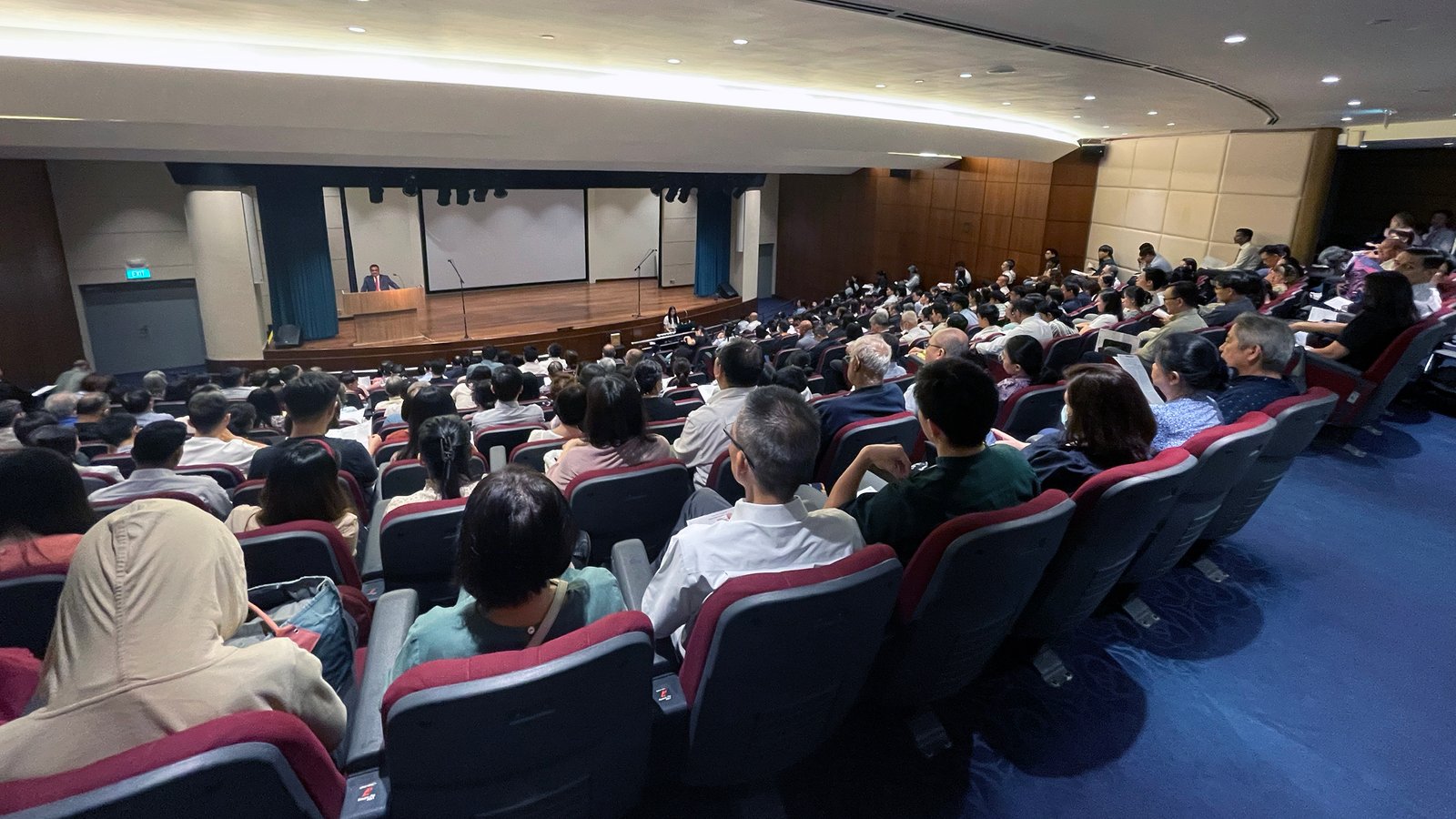
Celebrating the 38th Anniversary of Gethsemane Bible-Presbyterian Church
As Gethsemane Bible-Presbyterian Church marks its 38th anniversary, we pause with gratitude and reverence to reflect upon the Lord’s sustaining grace. From its inception until now, the church has withstood many obstacles and challenges not by human strength, but by the faithful hand of God, who builds, preserves, and blesses His people. This milestone is not merely a celebration of years passed, but a renewed commitment to the biblical principles that define our identity, our polity, our leadership, and our sacred goals.
At the heart of our reflection lies this conviction: the church belongs to Christ. He alone is the Head of the church (Ephesians 1:22–23), and all authority, order, and ministry within the church must flow from His Word. Therefore, our polity is not shaped by convenience or culture, but by Scripture. It is our desire that in all things, Christ may be pre-eminent (Colossians 1:18).
Gethsemane Bible-Presbyterian Church has been established upon a biblical model of leadership, wherein Christ governs His church through appointed servants—pastors and elders—supported by preachers and deacons, each fulfilling distinct yet harmonious roles.
The Board of Elders: Spiritual Oversight and Governance
The Board of Elders bears a solemn responsibility for the spiritual oversight and governance of the church. Scripture teaches that elders are entrusted with the care of God’s flock: “Take heed therefore unto yourselves, and to all the flock, over the which the Holy Ghost hath made you overseers…” (Acts 20:28).
Their role is not merely administrative, but profoundly spiritual. Elders are called to:
They serve as under-shepherds, accountable to the Chief Shepherd, the Lord Jesus Christ (1 Peter 5:2–4). Their leadership must be marked by humility, vigilance, and faithfulness.
The Pastor: Leadership in Word and Oversight
At the centre of this leadership structure is the Pastor, who is called to lead both spiritually and administratively in accordance with Scripture. Called by the Lord to full-time teaching and leadership, he sets the directions for the Board of Elders and the church in sound teaching and application of God’s Word.
The Pastor’s primary duty is to feed the flock through the faithful preaching and teaching of God’s Word: “Preach the word; be instant in season, out of season…” (2 Timothy 4:2). He must labour in the Word and doctrine (1 Timothy 5:17), guiding the church in truth, correcting error, and nurturing spiritual growth. His role is not that of a mere administrator, but a spiritual leader who sets the tone for the church’s direction.
In relation to the Board of Elders, the Pastor provides leadership, counsel, and direction, working together with them in unity. While elders share in oversight, the Pastor bears a unique responsibility to lead them in matters concerning: (i) the spiritual health of the church, (ii) the faithful proclamation of Scripture, (iii) the overall vision and direction of ministry.
This leadership must be exercised not as dominion but as servant leadership, following the example of Christ Himself.
The Role of Pastors and Preachers: A Shared Ministry of the Word
The ministry of the Word is central to the life of the church. While the Pastor leads, he is not alone in this calling. Other pastors and preachers are raised up within the church to labour together in teaching and proclaiming the truth.
This reflects the New Testament pattern: “And he gave some, apostles; and some, prophets; and some, evangelists; and some, pastors and teachers” (Ephesians 4:11). Together, they (i) expound the Scriptures faithfully, (ii) build up the body of Christ, (iii) equip believers for ministry, (iv) guard the church from doctrinal error.
Such a shared ministry ensures that the church is richly nourished and firmly grounded in the truth. It also reflects the unity and diversity of gifts within the body of Christ.
The Deacons: Faithful Support in Service
Alongside the elders, the deacons serve in a vital supporting role. Their ministry is one of practical service, enabling the elders and pastors to focus on spiritual oversight and the ministry of the Word.
The pattern is seen in Acts 6, where men were appointed to attend to practical needs so that the apostles might “give ourselves continually to prayer, and to the ministry of the word” (Acts 6:4).
Deacons: (i) assist in the administration of church needs, (ii) care for the practical welfare of the congregation, (iii) support the leadership in maintaining order and unity. Though their role is distinct, it is no less spiritual. Faithful service in practical matters contributes significantly to the health and witness of the church.
The Goals of the Church: Faithfulness to Christ
As we celebrate this anniversary, we are reminded that the church’s success is not measured by numbers or visibility, but by faithfulness to Christ and His Word.
As we look back on 38 years of God’s faithfulness, we are also called to look forward with renewed dedication. The challenges of the present age require clarity of conviction, unity of purpose, and dependence upon God.
Gethsemane Bible-Presbyterian Church stands today as a testimony of God’s grace. Through decades of ministry, the Lord has preserved His people, upheld His truth, and advanced His work.
As we celebrate this anniversary, may we remember that the future of the church rests not in human plans, but in the sovereign Christ who said: “I will build my church; and the gates of hell shall not prevail against it” (Matthew 16:18).
Therefore, let us press on—steadfast, united, and faithful—until the day when the Chief Shepherd shall appear, and we shall give account with joy.
